AsiaCALL2026
AsiaCALL 2026
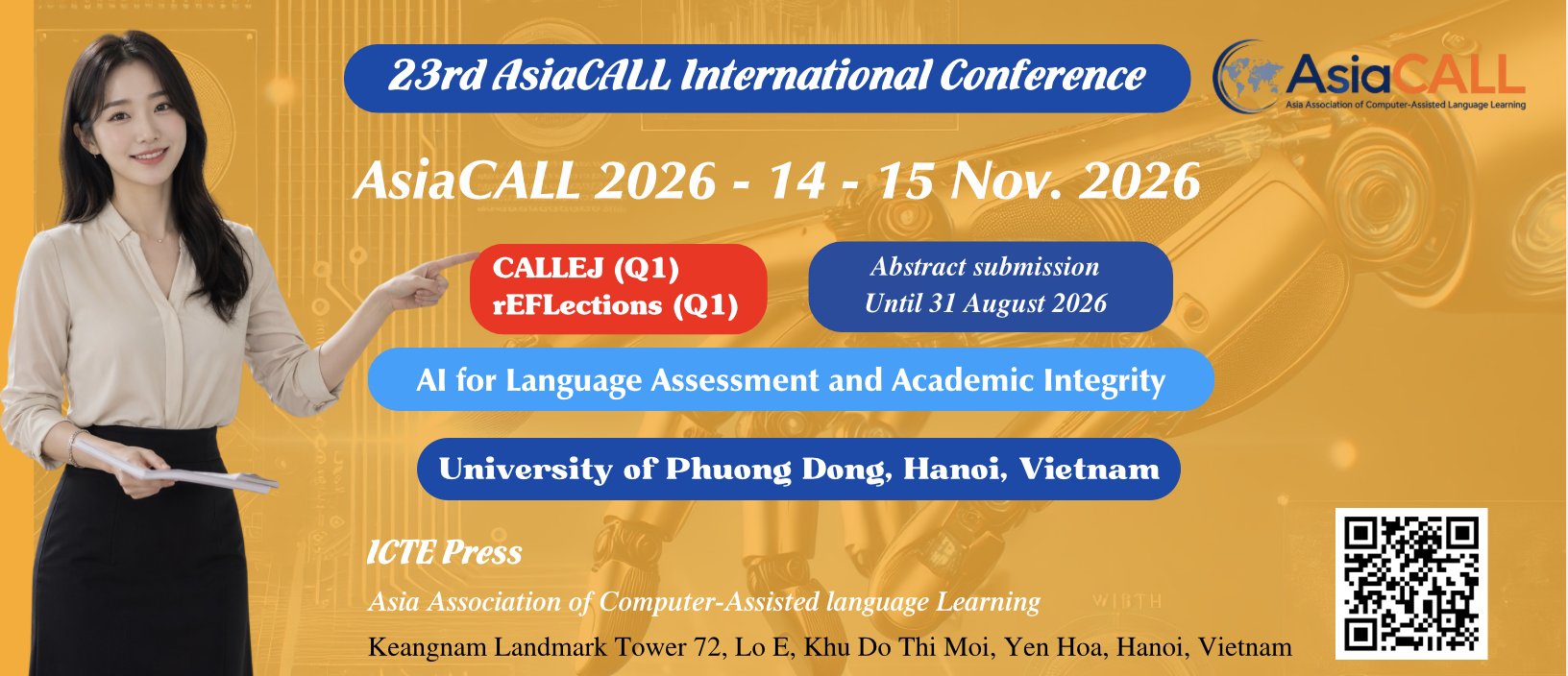
Authors from 23 countries & territories
This impressive participation reflects the growing international interest in responsible, innovative AI in language education.
Important Dates
Key deadlines for abstract submissions, notifications, registration confirmation, and full papers.
Abstract Submission
Until 30 July 2026
Notification of Acceptance
30 June – 15 August 2026
Registration Confirmation
10 September 2026
Full Paper Submission
15 September 2026
(Scopus: 30 Nov 2026)
PowerPoint Submission
10 November 2026
Conference Dates
14–15 November 2026
Presentation Modalities
AsiaCALL 2026 offers flexible participation options so presenters from Vietnam and abroad can share their work effectively.
🏛️ Local Presenters
Authors based in Vietnam present in person at University of Phuong Dong in Ha Noi (Keangnam Landmark 72), allowing for direct academic interaction and rich networking with international scholars.
🌐 International Presenters
Authors from other countries may join in a hybrid modality, choosing either live online presentation formats via dedicated Zoom tracks (Room 4) or on-site attendance in Hanoi.
Keynote Speakers
Distinguished international scholars delivering plenary keynote addresses at AsiaCALL 2026.

Assoc. Prof. Dr. Pham Vu Phi Ho
Plenary Keynote Addresses

Prof. Dr. Jozef Colpaert

Prof. Dr. Andrew Lian

Prof. Dr. Jeremy White

Dr. Ania Lian
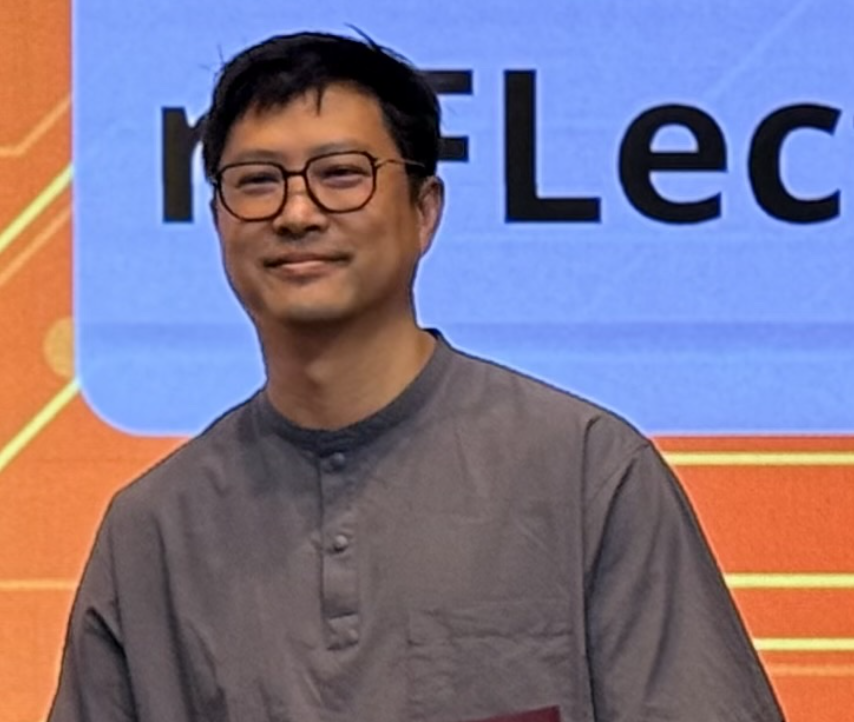
Asst. Prof. Thanis Tangkitjaroenkun
Featured Talks
Special invited presentations examining institutional leadership, curriculum development, and digital literacy.

Dr. Duy Van Vu

Dr. Mai Ngoc Khoi
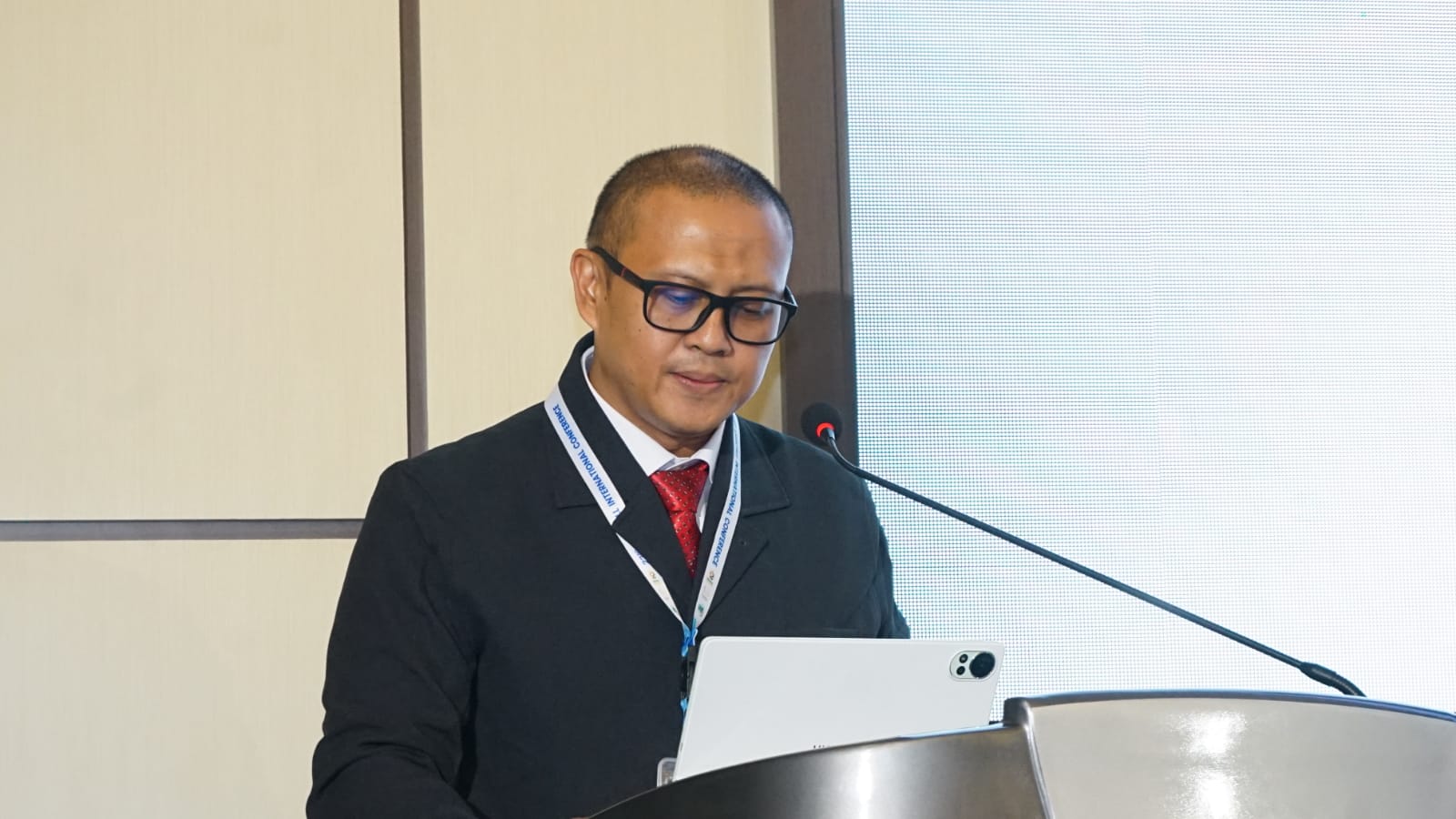
Dr. Lala Bumela Sudimantara

Assoc. Prof. Dr. Nguyen Van Long
Prestigious Publication Venues
Selected high-quality papers will be fast-tracked for peer-reviewed publication across internationally indexed Scopus Q1 journals and indexed conference proceedings.
Proudly Supported By
We thank our sponsors for supporting AsiaCALL 2026 and the advancement of AI in language education.

LingoLesson
LingoLesson is a web-based learning management platform designed for language teachers. Teachers can create modular lessons covering all four language skills, collect audio, video, and written responses, and provide personalized feedback. Flexible authoring tools, private class galleries, and optional AI assistance support engaging learning activities while keeping teachers in control.
- Modular four-skills lessons
- Audio, video & written responses
- Personalized teacher feedback
- Private class galleries
Eigo.AI
Eigo.AI is the world’s first fully AI-powered, web-based, four-skills English language learning platform. Learners can choose from a library of hundreds of leveled lessons, each containing seven connected activities, contextual vocabulary support, speaking practice, writing feedback, and classroom materials for teachers.
- Hundreds of leveled lessons
- Seven connected activities per lesson
- Speaking practice & writing feedback
- Classroom materials for teachers
Become an AsiaCALL 2026 Sponsor
Gain significant visibility, networking opportunities, and credibility within the CALL community in Asia. Connect with language educators, EdTech researchers, university program leaders, and educational innovators from across Asia and the globe.
Organizing Committee
Host university leadership and local organizers steering AsiaCALL 2026.

Assoc. Prof. Nguyen Huu Cuong

Dr. Pham Thuy Duong
AsiaCALL Secretariats

Dr. Quach Thi To Nu

Ms. Tran Thi Mai

Ms. Cao Thi Xuan Tu
External Affairs

Ms. Le Duc Hanh
AsiaCALL Media
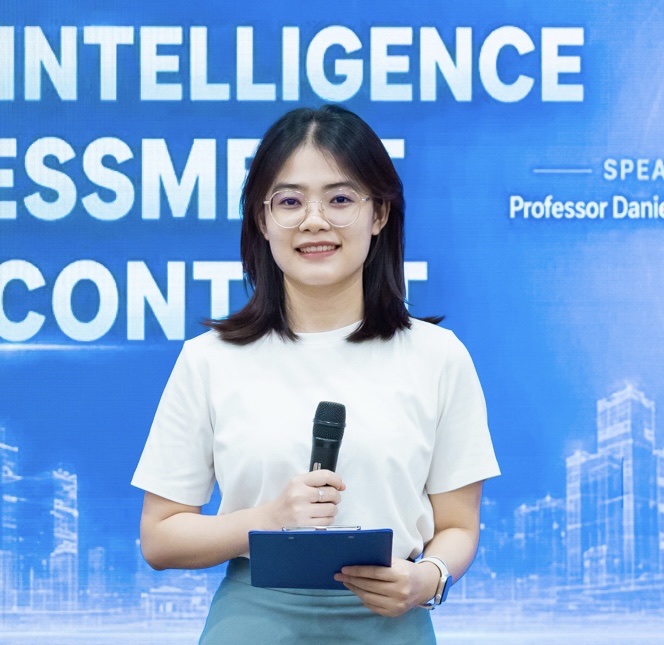
Nguyen Hai Linh, M.A.
Interests lie in AI-supported EFL teaching and assessment, technology-enhanced learning, learner engagement, and teacher development in higher education.

Nguyen Thi-Luong, M.A.
Interests focus on Technology-Enhanced Language Learning, Computer-Assisted Language Learning (CALL), and innovative integration of digital technologies.

Duong Ngoc Han, M.A.
Focus lies in exploring innovative digital approaches to English language teaching, supporting interactive learning, learner autonomy, and language practice.
AsiaCALL Conference Highlights & Sessions
Watch keynote addresses, featured research presentations, and symposium recordings from the AsiaCALL International Conference series.
📺 AsiaCALL Official Video Series
Includes keynotes, symposiums, and technology in language education workshops.
Conference Reference & Venues
| Conference | 23rd AsiaCALL International Conference (AsiaCALL 2026) |
| Theme | AI for Language Assessment and Academic Integrity |
| Dates | 14–15 November 2026 |
| Host University | University of Phuong Dong, Ha Noi, Vietnam |
| Address | Keangnam Landmark Tower 72, Lo E, Khu Do Thi Moi, Yen Hoa, Hanoi, Vietnam |
Quick Action Links
Submissions to Scopus Journals will be announced on 30 November 2026.
Register for Conference ➔ View Full Schedule ➔ Visit IJAILE.org ➔AsiaCALL 2026 Schedule
Conference Program at a Glance
Key metrics, research tracks, and international academic participation
Check-in, Music performance & Intro Videos
Participant check-in, musical performance, and conference introductory videos at University of Phuong Dong.
Introduction of the Opening Ceremony
Official introduction of the 23rd AsiaCALL International Conference.
Welcoming Remarks
Welcome address by the President of AsiaCALL.
Welcoming Remarks
Welcome address by the President of University of Phuong Dong.
AI for Language Assessment and Academic Integrity
How to Determine the Added Value of AI Based on an Ontological Specification?
Keynote Address 3 (Online)
Appreciation of AsiaCALL Sponsors
Special recognition and appreciation of AsiaCALL partners and conference sponsors.
AsiaCALL Commemorative Photograph
Official group photograph with all UPD leadership, keynote speakers, presenters, and conference participants.
Tea-Break & Networking
Morning tea-break and networking session for all delegates.
Parallel Sessions: Day 1 Morning
Simultaneous research presentations across 8 parallel sessions.
Temporal Processing and Cognitive Dimensions in L2 Listening: A Bibliometric Study of EFL/ESL Literature (1990–2025)
AI Assessment Scale and Construct Validity in EFL Writing Assessment
Toward Higher Education and AI-Infused English Teaching: Preferences, Potential Opportunities, and Challenges of the Implementation
Emotional Authenticity and Personal Voice in L2’s AI-Assisted Learning Reflections
Phenomenon-Based Learning Integrated with Literature-Based Instruction: Guidelines for Promoting and Evaluating Critical Thinking Skills
Applying Artificial Intelligence Algorithm to Predict Thai Final Exam Performance from LMS Data
Enhancing Vietnamese EFL Students’ Speaking Practice through AI-powered Feedback: An Action Research Study
Human Elements in AI Practice: The Role of Teacher Agency in English Language Classrooms
Supporting English Writing Students in the Era of Large Language Models
AI in Language Education: Assessment, Integrity, and Student Outcomes
Reimagining AI in Teaching: A Five-Year Review of Research, Trends, and Pedagogical Shifts
Self-Regulated ChatGPT Voice Practice and Perceptual Fluency: Evidence from EFL Learners’ Ratings, Logs, and Interviews
Integrating Metacognitive Regulation and Cooperative Learning: A Synergistic Framework for Enhancing Analytical Reading in Higher Education
Beyond Frequency: AI Reliance, Writing Self-Efficacy, and Learner Control Among Vietnamese Engineering Students
On Becoming Autonomous: Unveiling Student Teacher Autonomy in Initial Professional Identity Construction with Possible Selves
Teaching Students to Use Generative AI for EFL Writing: Practices of Vietnamese University EFL Teachers
Developing a BEVI-Based VR Nursing English Education Model: Transformative Learning in an AI-Supported COIL Environment
Assessing the Subjective: How AI Scores and Suggestions Shift Teacher Scores of Reflective Writing in a Languaging Course
Assessing the Educational Impact of an Interactive AI Agent on Autonomous English Learning
Verifying the Virtual Content Partner in Soft CLIL
Integrating Knowledge Constructivism and Group Investigation (G.I.) with Multimedia to Enhance Thai Grammar Instruction on ‘Sentences’ for 21st Century Learners
Third-Year English Majors’ Perceptions of ChatGPT’s Impact on Creative Capacity at the School of Advanced Study, Ho Chi Minh City Open University
Dating with ChatGPT: Exploring Perceptions and Promoting Autonomy in Speaking Contexts for Tourism Students
The Potential of AI in Enhancing English Teaching and Learning for Young Learners
Lunch Break
Conference lunch and informal networking.
Featured Talks (Day 1 Afternoon)
Parallel Sessions: Day 1 Afternoon
Simultaneous research presentations across 8 parallel sessions.
Vietnamese Upper-Secondary EFL Teachers’ Perceptions of AI-Assisted Writing Assessment and Academic Integrity
Beyond Frequency: AI Reliance, Writing Self-Efficacy, and Learner Control Among Vietnamese Engineering Students
Cognitive Responsibility Sharing between Students and Generative AI: Implications for Learner Autonomy in Higher Education
Linguistically Grounded AI for English Relative Clause Learning and Grammar Assessment
Enhancing English Majors’ Reading Comprehension through Project-Based Learning: An Action Research Study
Application of Semantic Networks to Language Teaching and Learning (with the Special Reference to Vietnamese Data)
The Effects of AI-Assisted Lexical Support on Productive Academic Vocabulary Use among Vietnamese English-Major Students
Developing AI-Resilient Language Assessment: Authentic Assessment Practices in Vietnamese EFL Higher Education
Developing An Ethical AI Checklist For K-12 Teachers Within Vietnam’s Digital Competency Framework
Using Generative AI to Develop Interactive Science and Engineering CLIL Materials
Applying Critical Thinking To Post-Evaluation in Japanese Translation
An Exploratory Study of AI Use in Improving English Writing Skills among EFL Students at Phenikaa University
From Reading to Dialogue: Story-Based Discussion and Self-Regulated Learning Awareness in Collaborative Online International
Integrating AI-powered Chatbots in Informal Digital Learning of English Pronunciation: A Participatory Study with Primary School Students
CLIL, Translanguaging, and AI Scaffolding
Impact of AI-Feedback on EFL Students’ Academic Writing Assessment Integrity in Vietnam
“Am I Still Teaching Writing?”: An Autoethnography of AI, Academic Integrity, and Teacher Identity in Online ELT
Beyond Prompt Engineering: A Human-in-the-Loop (HITL) Multi-Evidence Framework for ESL Essay Assessment
University Students’ Perceptions of Artificial Intelligence, Virtual Learning, and Smart Classrooms at Adventist International University, Thailand
Exploring Vietnamese Master’s-Level Students’ Attitudes, Perceived Usefulness, and Ethical Strategies in Using AI-Assisted Tools for TESOL Research
The Opportunities and Challenges of Applying CLIL in Kindergarten Education in Vietnam
Examining Reading Subskill Profiles Across CEFR Proficiency Levels Among Science and Technology Undergraduates
EFL Teachers’ Beliefs and Classroom Practices Regarding Artificial Intelligence (AI) at Phenikaa University
Exploring Perceptions of Translation Competence in the Age of AI: Insights from Vietnamese Foreign Language Learners
Tea-Break
Afternoon tea break in Room A4.8.
Keynote Address 4
Parallel Sessions: Day 1 Late Afternoon
Simultaneous research presentations across 8 parallel sessions.
Data-Driven Learning: A Solution to Academic Writing for Vietnam’s EFL Learners
From AI Feedback to Independent Writing: The Impact of Verification Instruction on Low-Proficiency Vocational EFL Learners’ Writing
Exploring Artificial Intelligence Applications in Improving English Speaking Skills among Students at the People’s Police Academy
AI-Based Assessment in English Medium Instruction in Higher Education: A Systematic Review
From Automated Feedback to Classroom Practice: Evaluating a Gamified EFL Writing Platform in Indonesian Higher Education
Gamification for English Grammar Instruction: Design and Expert Validation of a FABLE-Based Prototype for Low-Proficiency EFL
From MALL to AI-MALL: Task Design Competence for Pre-service English Teachers
Literacy Over Usability: Predicting EFL Lecturers’ Actual Use of AI-based Assessment Tools
Methods of Using AI to Enhance Learner Autonomy among Korean Language Students
From AI Feedback to Action: Student Uptake of Automated Speaking-Test Analysis
Speaking Confidence-Related Changes Following ELSA Speak Practice: A Pilot Survey of Malaysian Pre-University Students
EFL Teachers’ Questioning Practices: A Case Study at an English Centre in Hanoi
Designing an Integrated Game and Generative Artificial Intelligence Model for Teaching Beginner Korean Vocabulary
Generative AI in Second Language Speaking: A Bibliometric Analysis
From Language Support to Learning Dependency: Impact of GenAI on Students’ English Language Competence and Learner Autonomy
AI as Interlocutor: Interactional Competence and IELTS Speaking Score Divergence Under Spoken Dialogue System Mediation
Featured Talks (Day 2 Morning)
Stories, Emotion, and the Art of Reading Differently
Parallel Sessions: Day 2 Morning
Simultaneous research presentations across 8 parallel sessions.
AI-Supported Formative Assessment in Beginner French: Balancing Learner Autonomy and Academic Integrity
Designing AI-Resistant Language Assessments: An Evaluation Framework Based on Prompt Engineering and Critical Thinking
Investigating EFL Learner Autonomy in AI-Supported Adaptive Learning Environments: Evidence from Vietnamese Universities
AI-Mediated Learner Engagement in Task-Based L2 Writing: A Process-Oriented Perspective
Gamification and Student Engagement in Online English Classes: A Study from Students’ Perspectives
Generative AI in English Language Assessment and Academic Integrity: A Scoping Review
AI-Assisted Writing Behaviors and Perceived Writing Improvement: The Moderating Role of Writing Self-Efficacy among Vietnamese EFL Business Students
Integrating Experiential Learning and Design Thinking to Enhance Creative Writing Abilities
Who Decides? Learner Agency and Revision Decision-Making in GenAI-Assisted EFL Academic Writing
AI-Assisted Language Assessment and Academic Integrity in Selected Government Schools of Karnataka: A Survey-Based Study
Integrating AI Chatbots into Doctor-Patient Communication Training in Medical English: A Mixed-Methods Study
AI-Assisted Workflows for Language Assessment: Transforming Chinese Videos into Classroom-Ready Tasks
The Impact of AI-Assisted Preparation on Students’ Participation in EFL Classroom Debates
Intercultural Communication Experiences, Challenges, and Development: A Mixed-Methods Study of Tourism English Students in Vietnam
Can an AI Truly Converse?: Exploring Human-AI Interaction in English Speaking Practice
Fostering Critical AI Feedback Literacy in L2 Academic Writing: A Systematic Review of Frameworks and Interventions
Reliability of Large Language Models in Rubric-Based Vietnamese Essay Scoring: A Comparative Study with Instructor Ratings
Industry-Tailored Korean Curriculum Development for Private Universities in Vietnam: A Case Study of Phuong Dong University
Proficiency Without Interaction: Comparing Stance and Engagement in LLM-Generated and Human CEFR Writing
Secondary School Students’ Perceptions and Use of Learning Strategies in STEM-oriented English Lessons
Error Patterns in EFL Student Writing: A Corpus-Based Study Supported by Large Language Models
Navigating Learning-Oriented Language Assessment in the Era of Generative AI: English Language Lecturers’ Perspectives and Assessment Adaptations
A Study on the Use of AI Tools in Pre-Writing Stage Among Non-English Major Students
Does Generative AI Perceive L2 Korean Speaking Fluency like Human Raters?
Apply Cultural Familiarity Activities to Facilitate EFL Learners’ Reading Comprehension in Hanoi, Vietnam
From AI-free to AI-supported: Student Perceptions of Differentiated AI Assessment Design
Refining a Learner-Controlled Prompting Framework for AI-Assisted EFL Writing Revision: Evidence from a Comparative Chatlog Study
ChatGPT-Assisted Business Translation: Enhancing EFL Learners’ Translation Performance and Critical Engagement
Workshop: Human-Centred AI for Language Learning and Assessment: Eigo.AI and LingoLesson.com in Practice
Integrating Thematic Progression Knowledge into Writing Instruction: An Action Research Project at a University in Hanoi
AI Vulnerability of Assessment Methods in Teaching General English: The Investigation into Lecturer’s Perspectives
Development and Validation of a Language Engagement Scale for LMS-Supported EFL Writing
From Annotation to Automation: An AI-Assisted Decoding Diagnostic Framework for EFL Listening
The Role of AI in Shaping Ideas and Language in Academic Essay Writing
A Study on Discourse Markers in Applied Linguistics Articles by Vietnamese Writers
Workshop: Human-Centred AI for Language Learning and Assessment: Eigo.AI and LingoLesson.com in Practice
Pen, Prompt, and Plagiarism: EFL Perceptions of Generative AI in Language Assessment and Integrity
An Investigation into the Assessment Alignment and Score Validity of AI-Generated Writing Samples of VSTEP Writing Task 2
Lecturers’ Perspectives on Students’ Use of Artificial Intelligence in Scientific Research in Higher Education
Speaking Pedagogy in the Agentic AI Era
How Learners Use GenAI Across Speaking Lesson Stages
Teachers’ and Students’ Beliefs and Practices in AI-Assisted Writing Assessment at a Vietnamese University
Generative AI in Tertiary English Teaching: a Teacher Exploratory Questionnaire Study in Vietnam
Lunch time
Lunch break and informal networking for all delegates.
Keynote Address 6
Parallel Sessions: Day 2 Afternoon
Simultaneous research presentations across 7 parallel sessions.
Mapping Omani Foreign Language Learners’ Socio-emotional AI Literacy: Exploratory Pointers
Engaging with Generative AI Feedback in EFL Writing Revision: A Longitudinal Study of Learner Agency
Using Ai-Based Pronunciation Tools To Improve Prosodic Synchronization With Native English Models Among ESP Learners
Keeping the Verdict Human: A Design-Based Delegation Framework for AI Use in Beginner French Assessment
Local or Global? EFL Learners’ Revision Success Following AI-Generated Writing Feedback
Teaching Ethical Use of Generative AI in Academic Writing: Teachers’ Challenges and Pedagogical Responses
Errors in Indefinite Article Use in Freshmen’s Writing at a Higher Institution in Ho Chi Minh City
The Impact of E-Mind-Mapping on Vocabulary Retention and Production: A Study of EFL University Students
Enhancing English Tourism Vocabulary through LMS-based Multiple-choice Quizzes with AI-generated Questions
Exploring Students’ Perceptions of Guided and Unguided AI Use in Completing EFL Speaking Tasks
Building Pedagogical Resilience with Generative AI: A Case Study of Petrozavodsk State University
Unpacking the Effects of AI-enabled Knowledge Management on English Major Students’ Problem Solving: Examining the Mediation of Attitude
Exploring the impact of AI-Assisted Speaking Activities on Self-Regulated Learning
Tracking Feedback Uptake through Human-in-the-Loop AI-Supported Closed-Loop Feedback among Vietnamese English-Major Students
Students’ Perceptions of ChatGPT for English Writing: A Mixed-Methods Study in a Vietnamese University
Non-English Majors’ Willingness to Answer Self-Assessment Questionnaires: Insights from Tracking Their E-Learning Response Behavior Across Three Academic Terms
From Detection to Design: Weaving UNESCO’s AI Competency Framework and the AI Assessment Scale for Trustworthy Language Assessment
Teachers’ AI Readiness: a Systematic Review of Conceptualization and Operationalization for Measurement
The Effects of Recasts and Explicit Correction on Non-English-Majored Students’ Grammar Acquisition
Next-Gen Education: Crafting a Theory for AI-Assisted Language Learning
Perceptions and Impact of AI-Augmented Speaking Practice with Chatbot Support for English-majored Students in Vietnam
Rethinking Assessment Validity in the GenAI Era: Student Perceptions and a Multi-Layered Design Proposal for an English Language Programme in Vietnam
Effects of AI-Supported Reflective Journaling on Vocabulary Use Among B1-Level Vietnamese EFL Learners
Cross-Cultural Adaptation and Psychometric Validation of a Digital Competence Scale Aligned with DigComp 3.0: An Empirical Study in Vietnam
Students’ and Teachers’ Perceptions of AI-giarism in Academic Writing
Workshop: Bringing Reading lessons to Life with The Assistance of AI Tools
AI-Mediated Assessment and Academic Integrity in Vietnamese Tertiary English Language Teaching
When Students Shift from Peers to AI: Mediational Gravity and the Reorganization of Epistemic Work in Collaborative Learning
Negotiating Teacher Professional Identity In GenAI-Mediated English Writing Instruction
Reconceptualizing Speaking Anxiety in the Age of AI: a Mixed-methods Study in an Engineering EFL Context
Narrating AI-Assisted Scholarly Selves: Identity Tensions among Doctoral Candidates at a Vietnamese University
AI-Supported Formative Assessment in Beginner French: Balancing Learner Autonomy and Academic Integrity
Workshop: Bringing Reading lessons to Life with The Assistance of AI Tools
The Moving Threshold: AI Integrity Beliefs and Disclosure Intentions Among Vietnamese English-Major Students
Reproducible but not Interchangeable: Criterion-Specific Human–LLM Divergence in the Assessment of EFL Internship Reports
ICTE Symposium
Distinguished executive panel discussion on the future of research, publication, and AI integration in language education.
- Assoc. Prof. Dr. Pham Vu Phi Ho — President of AsiaCALL
- Prof. Dr. Jozef Colpaert — Former Editor-in-Chief of Computer Assisted Language Learning (Journal)
- Prof. Dr. Jeremy White — Vice President of AsiaCALL
- Asst. Prof. Thanis Tangkitjaroenkun — Vice President of AsiaCALL
- Dr. Ania Lian — Vice President of AsiaCALL